
A small home studio lets you record whenever jobs come up, makes your recordings sound professional, and helps you try different voices and styles without renting time.
3 Main Benefits:
Faster jobs: Recording at home means you can deliver auditions and finished work right away, which makes clients more likely to hire you again.
Better sound: A quiet, acoustically treated room and basic gear produce clear recordings that sound professional.
Higher value: Consistently clean recordings can lead to higher-paying opportunities like audiobooks and national ads.
What You Actually Need:
A quiet room and simple treatment
Rugs, thick curtains, and an acoustic foam panel or two to tame echoes.
For portability, some companies offer isolation shields that go around your microphone and act as a mini-booth.
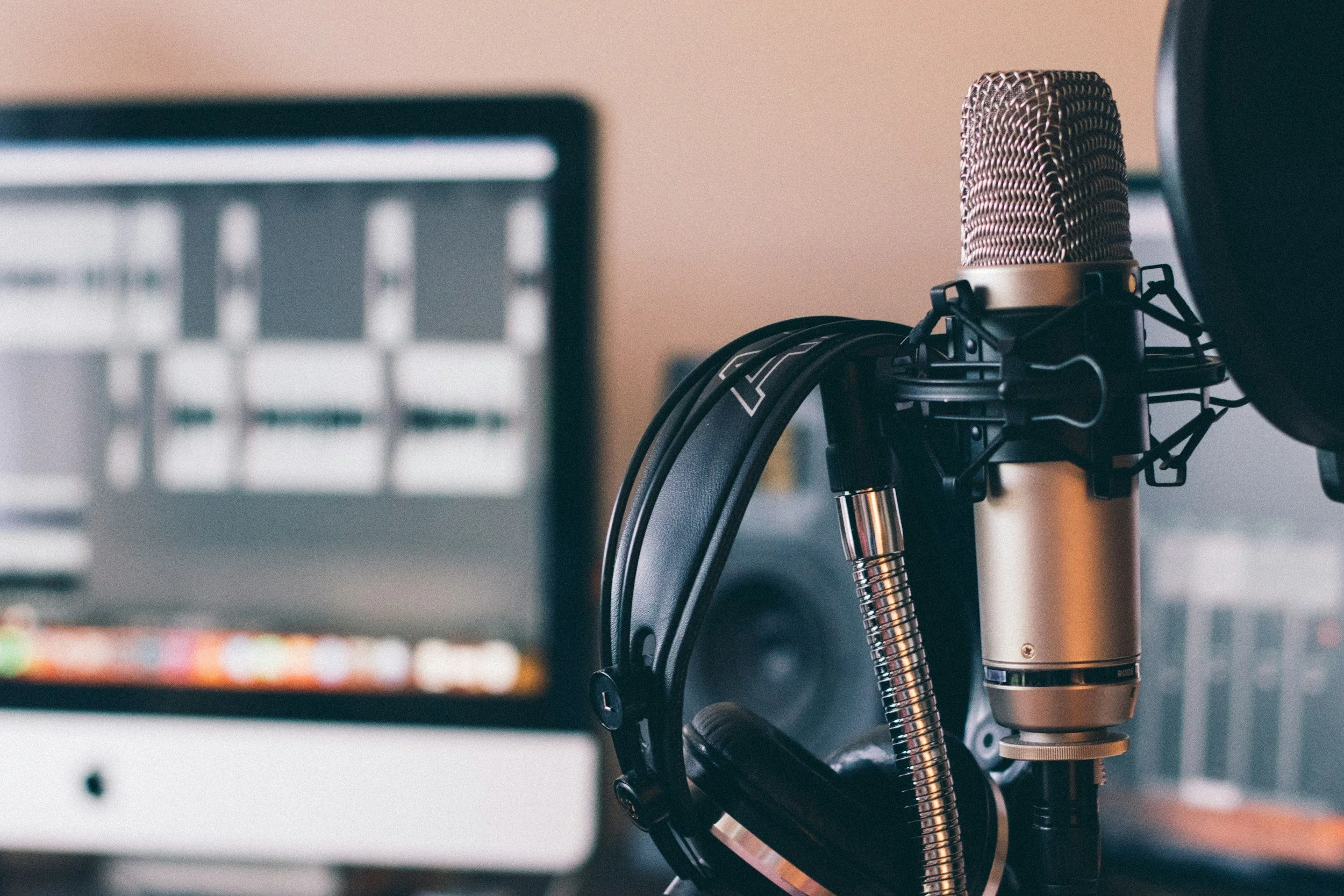
A good microphone and a pop filter
One large-diaphragm condenser or broadcast-style microphone. Many beginners choose something like the Shure SM7B.
The pop filter goes between your face and the microphone to help reduce harsh “b” and “p” sounds in your recordings.
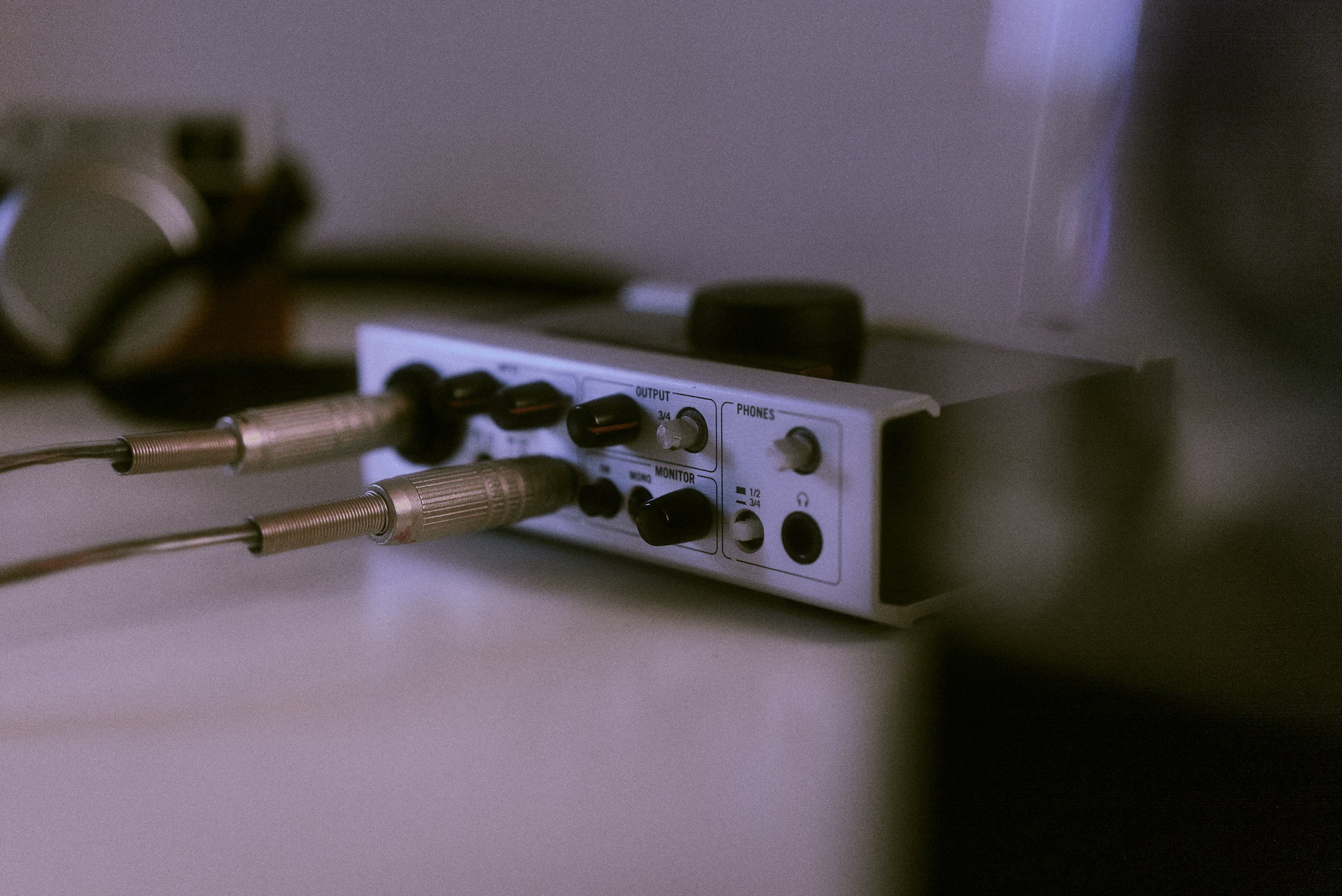
An audio interface
This small box connects your microphone to your computer or tablet for recording.
Some interfaces are powered by your device with a USB cable, but higher cost and quality ones need to be plugged into an external power source like a wall outlet.
Headphones
Closed-back headphones so you don’t hear playback feeding back into your recording.
A computer or tablet and a recording/editing app
Either a computer or tablet can be used with a range of free or paid apps called Digital Audio Workstations (DAWs) to record and edit.
Small extras
A mic stand, an XLR cable to connect your microphone to your interface.
Setup Tips that Help Right Away
Arrange the recording space with soft items (like rugs and blankets) before buying expensive acoustic treatment solutions.
Keep a consistent microphone distance and mark it down so recordings are consistent.
Create a routine of saving your files on multiple drives, both physical and digital storage.
Learn how to perform basic cleanup of your audio: remove noise, apply light compression and EQ.
Quick Demo Advice
Make short (30-60 second) demos for each type of work that you want: commercial voice over, narration, animation etc.
Last Tip…
The initial costs can seem daunting. However, the ability to accept remote jobs and turn them around quickly often pays the investment back through repeat clients and higher-paying bookings.
So, treat your home studio like a small business: meet deadlines, have a system for clearly labeling files, invoice clients promptly, and deliver files professionally.
